This page explains laboratory work in general terms. It is not medical advice and cannot interpret anyone's test results — that belongs with a doctor or care team.
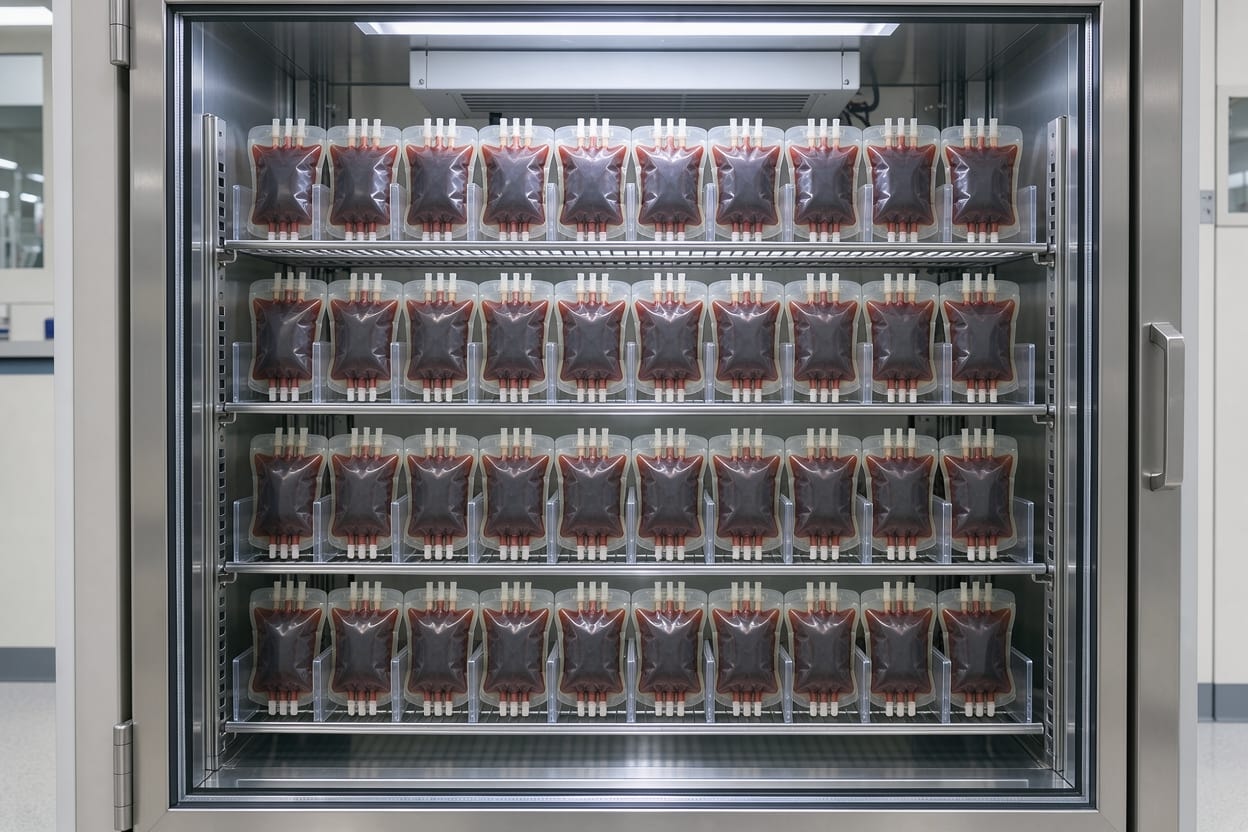
A blood bank combines the handling of blood components with testing that supports transfusion. In a hospital, the term commonly refers to a department within the clinical pathology laboratory that stores components and performs pre-transfusion and compatibility work. The blood bank reference describes collection, processing, testing, separation and storage as parts of blood banking. The laboratory contribution extends beyond refrigeration.
Blood groups describe antigens and antibodies
A blood group is a classification based on inherited antigens on red-cell surfaces and associated antibodies. Antigens are molecular features that antibodies can recognize. The blood type reference explains that these features can be proteins, carbohydrates and related molecules. Blood typing uses those differences in a practical classification.
ABO group names describe whether A antigen, B antigen, both or neither is present on red cells. Rh status adds another important classification. The American Red Cross blood type explanation describes Rh factor as present or absent. Those familiar letters and signs summarize particular features; they do not describe every antigen relevant to compatibility.
Antibodies in a plasma sample can react with antigens on red cells. The Red Cross explanation connects careful typing and cross-matching with transfusion safety. A blood-group label is the beginning of compatibility work rather than a complete description of it.
Immunohematology at the bench
Immunohematology studies antigen-antibody reactions as they relate to blood disorders and transfusion work. The immunohematology reference lists typing, cross-matching and antibody identification as day-to-day duties.
Typing establishes group information. Antibody screening looks for unexpected blood-group antibodies. Cross-matching forms part of the pre-transfusion compatibility sequence. The cross-matching reference places these checks together. The sequence connects information about the intended recipient with information about a particular donated component.
In a serological cross-match, the laboratory combines a sample of the intended recipient's plasma with donor red cells. A reaction can be detected through clumping, red-cell destruction or a further reagent reaction. The cross-matching explanation describes what the method observes. It is a test of compatibility under the laboratory's procedure.
Some circumstances permit electronic cross-matching, which compares established test information through a computer-assisted process. The same reference describes this as dependent on available blood-group and antibody-screen data. Electronic work still depends on laboratory findings and records.
Components and separation
Blood contains cells and a liquid component, plasma. Red cells carry oxygen, platelets contribute to clot formation and plasma contains dissolved proteins and other substances. The MedlinePlus transfusion overview separates whole blood from the components that may be used. A blood bank therefore manages scientifically different kinds of material.
Collected blood can be separated by centrifugation into red cells, plasma and platelets. The blood transfusion reference describes this processing step. Component preparation connects the physical properties of blood with the practical organization of the supply.
Plasma is the fluid portion containing proteins, electrolytes and other dissolved material. It can be separated from blood collected with an anticoagulant by centrifugation, as the plasma reference explains. Platelets are cell fragments involved in responding to vessel injury and forming a clot, as the platelet reference describes. Appropriate handling follows the nature of the component.
The transfusion reference describes different storage conditions for red cells, platelets and plasma. Its processing and testing section distinguishes refrigerated red cells, platelets kept with agitation and frozen plasma. Storage preserves the suitability of a component alongside the tests performed before use.
Processing can include removing white blood cells through filtration, a step known as leukocyte reduction. The blood-processing description places this within preparation of blood components before storage. Filtration changes the cellular material present in the component; it is a different operation from testing blood groups or separating red cells, plasma and platelets.
Records follow the component through the blood-bank process. The transfusion reference’s account of traceability describes individually traceable units through collection, testing, component separation, storage and administration. That record allows a suspected transfusion-related problem to be investigated through the relevant stages. The laboratory therefore manages relationships between a physical unit, the testing performed on it and the record of its movement, alongside its compatibility findings.
The supply is a regulated system
The U.S. Food and Drug Administration describes its role in regulating collection, setting standards, inspecting blood establishments and monitoring reports of errors and adverse events. Its account also describes donor screening and testing donated blood. These are overlapping safeguards across a system.
The FDA's explanation acknowledges that biological material carries an inherent risk of infectious agents. Its blood and blood products overview presents risk reduction and the availability of blood as connected concerns. Component handling, testing and documentation contribute at different points in that system.
The American Red Cross blood supply page states that blood and platelets come from volunteer donors and describes the ongoing need for components. This is background about the supply; this guide does not arrange donations. The material must be tested, processed and managed for its intended purpose.
Oversight extends to the materials used to handle blood. The FDA’s description of related equipment includes cell-separation devices, blood-collection containers and infectious-agent screening tests. It also describes maintaining records of unsuitable donors. These controls concern collection and preparation infrastructure, while compatibility testing concerns a particular donor component and intended recipient. They address different stages of the blood supply.
Who contributes to blood banking
O*NET’s technologist task list includes blood typing and antibody screening.
The list of job titles on St. Cloud State University’s MLS careers page includes blood bank technologist. The page is a careers reference, not a statement that every listed occupation has the same training. Blood banking places analytical work within a team that also manages supply, records and clinical communication.
AABB describes itself as an international nonprofit association for people and institutions involved in transfusion medicine and biotherapies. Its work includes standards, accreditation and education. The laboratory careers here belong within that wider professional field, while a society's activities remain separate from an employer's role requirements.
The compatibility process example follows typing and cross-matching in sequence. The hospital department guide places the blood bank alongside chemistry, hematology and other testing areas.