This page explains laboratory work in general terms. It is not medical advice and cannot interpret anyone's test results — that belongs with a doctor or care team.
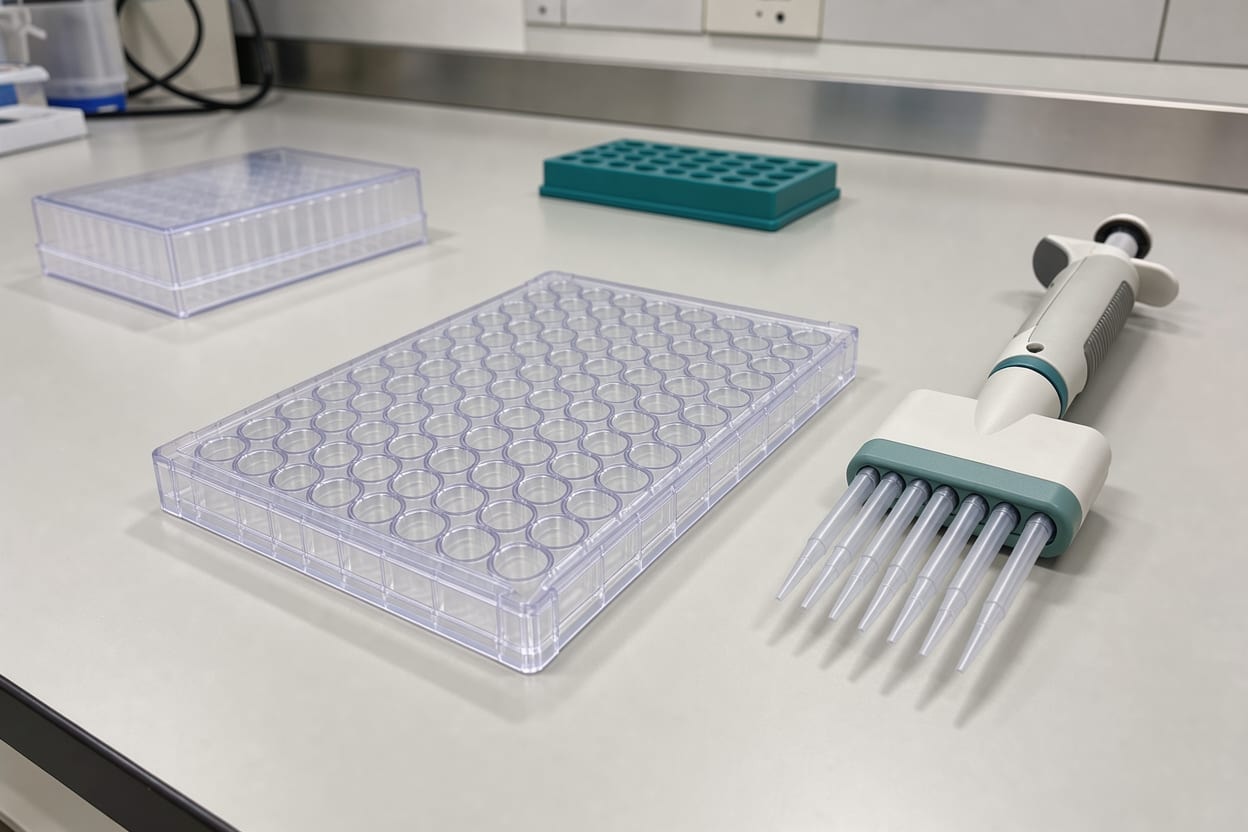
Molecular diagnostics applies molecular biology to testing. Its methods examine biological markers in genetic material and proteins, as the molecular diagnostics reference explains. For a career reader, the central idea is a change of scale: the laboratory can investigate a particular sequence or molecular feature rather than only the appearance of cells or the growth of an organism.
PCR makes a selected DNA segment easier to study
Polymerase chain reaction, abbreviated PCR, makes copies of a selected DNA segment. The National Human Genome Research Institute fact sheet explains that the copied material can then be used in other laboratory procedures. Amplification refers to making more of the target sequence; it does not mean making a whole organism.
The institute’s PCR glossary entry describes primers as short synthetic DNA fragments used to select the segment. That selection is a defining part of the method. The reaction depends on matching the primer sequences to the intended DNA, not simply making more of every substance in the sample.
A PCR mixture includes the template DNA, primers, a DNA-copying enzyme and the molecular building blocks used to make new strands. The PCR reference also describes a buffer that provides a suitable chemical environment. The components have different jobs: a template supplies a pattern, primers identify the target region and the enzyme builds complementary strands.
The cycle: denature, anneal, extend
During denaturation, heating separates the paired DNA strands. Cooling then allows primers to bind to complementary sequences; this is annealing. Extension is the enzyme's production of a new strand from the available building blocks. The PCR method reference describes these processes as a cycle. Each phase depends on the physical and chemical conditions appropriate to that reaction.
The new DNA can serve as a template in later cycles. A thermal cycler changes the temperature repeatedly so the relevant reactions can take place, as the NHGRI fact sheet explains. The instrument controls the cycling, while the reaction design determines which segment is copied.
The PCR reference notes that the annealing conditions influence both efficiency and specificity. Its annealing explanation describes the problem of primers failing to bind or binding imperfectly. This helps explain why a laboratory method is more than a list of reagents: the conditions of their interaction affect the usefulness of the resulting measurement.
Real-time PCR and reverse transcription are different ideas
Real-time PCR follows amplification while it is happening. The real-time PCR reference contrasts that approach with examining the product at the end. A fluorescent signal allows the progress of amplification to be detected during the run. Some formats use dyes that bind double-stranded DNA; others use sequence-specific probes.
Reverse transcription addresses a different issue: the starting material is RNA. The RNA is converted to complementary DNA before PCR. The same reference explains this conversion and distinguishes the common abbreviation RT-PCR from real-time PCR. The phrases describe different features of a method and can be used together when both apply.
The real-time PCR reference’s diagnostic overview also describes assays used to detect emerging flu and coronavirus strains.
A molecular test can therefore combine sample preparation, selection of a target, amplification and signal detection. Understanding the words in a method description helps identify what the instrument is actually measuring. The molecular diagnostics overview emphasizes sample preservation, particularly for RNA, which is vulnerable to breakdown. Earlier handling remains relevant even when the measurement is highly automated.
Genetic testing covers more than a single method
The MedlinePlus Genetics testing index organizes questions about test types, uses, informed consent, validity, limitations and the difference between screening and diagnostic testing. It also points to topics on exome and genome sequencing and the difference between research and clinical testing. It is a reading map for those subjects, rather than a claim that every genetic test uses PCR.
The molecular diagnostics reference describes methods such as PCR-based assays and fluorescence in situ hybridization. Its discussion of assays shows that copying DNA and locating a molecular signal are different analytical approaches. A laboratory selects a method around the feature it needs to examine.
Cytogenetics connects chromosomes with cell biology
Cytogenetics examines chromosomes and their relationship to cell behavior. The cytogenetics reference includes karyotyping, chromosome banding and molecular cytogenetic techniques. It connects microscopic observation with genetic information.
O*NET’s cytogenetic technologist profile describes preparing specimens for chromosome examination, growing cell cultures, preparing slides and examining chromosomes. The tasks also include assessing whether a specimen is suitable, documenting technical issues, maintaining quality procedures and reporting results. These operational responsibilities sit alongside the interpretation of chromosome appearance.
That task list includes extracting and preparing DNA for analysis and creating chromosome images through computer systems. The cytogenetic technologist profile illustrates how a role can combine specimen work, microscopy and molecular methods. It is more informative than assuming that a job title refers to only one instrument.
Where molecular work meets public health
APHL’s respiratory disease overview describes public health laboratories monitoring which viruses circulate, where they occur and whether they are changing. Its account includes sequencing and virus isolation as contributions to surveillance. Molecular information becomes part of a wider public health picture rather than ending at the instrument.
The public health laboratory guide puts that work alongside food safety, screening and preparedness. The hospital department guide shows how molecular diagnostics also fits with other clinical testing areas.